I don't think (Peter) would do it
just to hurt his father; I think there must
be some moral outrage in him. I have to say
that if my father were saying or doing some
of the things that Hank is doing, l would
have to disagree - Victoria
Wulsin MD DrPH (source)
Synopsis
1. The
Heimlich Institute & Deaconess: promoting
medical madness "in perpetuity"
2. The Ohio
2nd "malariotherapy" congressional race
3. Who is the
"American sponsor"?
4. Thomas
Powell & the Rotary connection
5. A cheap
AIDS cure would be worth its weight in gold - the
Michele Ashby connection
6. Where's
the $9 mil? Ask Phil
7. Hey Joe, did you
bring Dr. Wulsin into the Heimlich Institute? And
why did your client the Episcopal Church play
go-between in the Heimlich Africa experiments?
Addendum: "A Caring
World"
Heimlich Institute's IRS
990s, 1989+1995-2006
Synopsis
Since the
late 1980s, Cincinnati's Heimlich Institute has
conducted a series of notorious experiments on
AIDS, cancer, and Lyme disease patients, both US
citizens and foreign nationals. The unsupervised
"research," which consists of infecting patients
with malaria, is called "malariotherapy" or
"immunotherapy."
Reports
from American patients describe being injected
with malarial blood in hotel rooms, resulting in
weeks of excruciating pain and 105 degree fevers.
In violation of laws protecting human research
subjects, the work has been conducted without any
legitimate institutional oversight.
Over the
decades, organizations like the World Health
Organization and experts have compared the
Heimlich projects to Nazi concentration camp
atrocities and to the Tuskegee Syphilis
experiments. Prominent critics include NIH
director Dr.
Anthony Fauci and Dr.
Peter Lurie of Public Citizen's Health
Research Group. Exhaustive documentation is
available at the
CIRCARE
bioethics website.
Reportedly
the Heimlich Institute has conducted clandestine
"malariotherapy" experiments on HIV+ African sex
workers and others in Ethiopia and Gabon,
supervised by my father and a car rental agent in
the San Francsico area. Published information
suggests the work was funded by gold mining
companies, lured by promises of an inexpensive
"miracle cure" for a disease that continues to
decimate their work force.
In this
2007 speech, my father states that the blood
samples from Africa have been analyzed in US and
German labs. Beacuse the experiments were
usupervised, the acquisition, transport, and
analysis of the blood samples probably US and
international laws.
The
documented history of the Heimlich
"malariotherapy" experiments involves an unlikely
cast of players and institutions: a $200
million/year Cincinnati hospital, the Episcopal
Church, a Rotary International executive, a
Denver-based gold mining executive, Jason
Zengerle (a senior editor at The New
Republic), Johnny Carson's ex-wife, and others
who were either "true believers" or simply in it
for the money.
Also mixed
up in the Africa experiments are two losing
candidates in a 2008 Ohio 2nd Congressional
District race. One is my
brother, Phil Heimlich, the longtime
vice-president of the Heimlich Institute. The
other is Democrat front-runner Dr. Victoria Wells
Wulsin. In 2004, Dr. Wulsin worked at the Heimlich
Institute and was planning to succeed my father as
president of the organization and oversee the
Africa AIDS experiments. (The Ohio congressional race
was likely the first time human subjects abuse has
ever become a political campaign issue. Per widely-aired TV commercials
and news reports, the Heimlich experiments
became a central issue in the race.)
Per this March 5, 2008
video, my father say he's moving forward with
a new project:
Justin
Jeffre: I was wondering if you can tell me
what the current status of immunotherapy
(malariotherapy) is?
Dr. Henry Heimlich: Uh, we just had an
extensive meeting. And it’s starting in a new
country...we’re using it. Yeah.
The purpose of this
web page is to bring to light more information
about the Africa experiments.
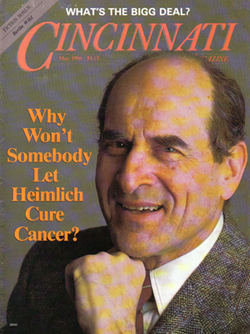
Cincinnati
Magazine, May 1986
Back
to Table of Contents
For over 25 years, my father,
Dr. Henry Heimlich - who has no training in
immunology and who was fired from his last hospital
job in 1976, in part due to repeatedly fainting
while performing surgeries - has promoted a quack
theory called "malariotherapy." Over the years, he
has claimed that AIDS, cancer, and Lyme disease may
be cured by deliberately infecting patients with
malaria. He
bases his claims on a long-discredited theory
advocated by an early 20th century psychiatrist,
Julius Wagner-Jauregg, who believed malaria cured
syphilis. (Awarded the Nobel Prize in 1927,
Wagner-Jauregg later became a Nazi eugenecist "who
advocated the forced sterilization for people
regarded as genetically impure." The
Scotsman, January 25, 2004.)
Since at least 1988, my
father and the nonprofit Heimlich Institute (HI)
have been organizing and funding unsupervised,
clandestine "malariotherapy" experiments on US
citizens and foreign nationals in Mexico, Panama,
China, and, according to recent reports, Ethiopia
and Gabon.
Here's how two Lyme disease
patients from New Jersey described the treatment:
Monahan recently recalled the
experiments as "exciting (and) very clandestine,
like a drug deal. We flew down there and went to
this hotel. This doctor came to our room and
opened a black valise with these little vials of
blood. He had (me) lie down on the bed and he
injected (me) with the blood. And (I) went back to
the States like on the next flight and pretty soon
(I) broke out with malaria." (Heimlich's
Audacious
Maneuver, Los Angeles Times, October 31, 1994)
"Within two days I started to get fevers
as high as 106 degrees"...After Monahan's return
from Mexico City, life consisted of hours of fever
followed by chills - and intense pain. "My lower
back felt like a truck slammed into it and I found
that a malaria headache is the most excruciating
pain you can imagine." Her New Jersey doctor
allowed the malaria to persist untreated for five
weeks. During that time she logged 130 "fever
hours," when her temperature exceeded 101 degrees.
She vomited constantly, lost 40 lb. and required
intravenous fluids to compensate for dehydration.
"We went until my body couldn't take it anymore,"
she recalled, "and then I took the antimalarial
drug..."I'm going back for another treatment,"
she says. "Dr. Heimlich told me I may have to do
it again. He's made all the arrangements with the
doctors in Panama." - Cyndi Monahan
(Heimlich's
Maneuver? American Health, June 1991)
(Nanci) Modiano went to Mexico City with
her husband last November. She then endured 35
days of spiking fevers that reached 108 degrees,
kept alive by 24-hour nursing by family members in
New Jersey. "I was scared I would go into a coma,
the fevers were so high," she says. But she
couldn't go to a hospital to have her malaria
treated, because that would lower the fevers she
thought would help her. (Some
Lyme
Patients
Turn
to
Risky
"Remedies," Boston Globe, August 12, 1991)
Experts have compared the
Heimlich Institute's "research" to Nazi concentration camp
atrocity experiments and to the infamous Tuskegee
syphilis trials. The work has been criticized or
denounced by the Centers for Disease Control, the
Food & Drug Administration, the World Health
Organization, Dr. Anthony Fauci of the National
Institutes of Health, Dr. Peter Lurie of Public
Citizen, the National Council Against Health Fraud,
and many others. (For thorough documentation, see
the CIRCARE
bioethics website.)
Such concern is enhanced by the Heimlich Institute's
history of ignoring requests for information and
data. When asked to respond to criticism, my father
simply denies everything and makes absurd claims:
Heimlich, contacted
yesterday at his home in Cincinnati, said that
describing his work as south-of-the-border
research…is despicable." He said cancer research
regulations in Mexico were more stringent than
those in the United States. (Heimlich
Uses Malaria to Treat Cancer, Philadelphia
Daily News February 29, 1988)
In Spring
2003, the HI's "malariotherapy"
experiments
in
China
were
widely
exposed in the media, including
separate bylined reports in the New York Times, Los
Angeles Times, Reuters, and a front page expose in
the Cincinnati Enquirer. Meanwhile, the HI has
proceeded with similar clandestine experiments in
Africa. Thomas
Francis's November 2005 Radar Magazine
article describes that project:
Mekbib
Wondewossen
is an Ethiopian immigrant who makes his living
renting out cars in the San Francisco area, but
in his spare time he works for Dr. Heimlich,
doing everything from "recruiting the patients
to working with the doctors here and there and
everywhere," Wondewossen says. The two countries
he names are Ethiopia and the small equatorial
nation of Gabon, on Africa's west coast.
"The
Heimlich
Institute is part of the work there - the main
people, actually, in the research," Wondewossen
says. "They're the ones who consult with us on
everything. They tell us what to do."
Wondewossen
says
that
the
project
does
not involve syringes full of malaria parasites.
"We never induce the malaria," he says. "We go to
an epidemic area where there is a lot of
malaria, and then we look for patients that have
HIV too. We find commercial sex workers or
people who play around in that area." Such
people are high-risk for HIV, and numerous
studies show the virus makes its victims more
vulnerable to malaria.
A
key to containing malaria is speedy treatment.
In the most resource-poor areas, clinicians who
lack the equipment necessary for diagnosing
malaria will engage in presumptive treatment at
the first signs of fever. This, says
Wondewossen, runs contrary to Heimlich's
interests. What physicians in Africa usually do
"is terminate the malaria quickly when someone
gets sick," he says. "But now we ask them to
prolong it, and when we ask them to do that, the
difference is very, very big."...Wondewossen
say that the researchers involved in the study
are not doctors. He refuses to name members of
the research team, because he says it would get
them into trouble with the local authorities.
"The government over there is a bad government,"
he says. "They can make you disappear."
Wondewossen
won't
reveal
the
source
of
funding for this malariotherapy research. "There
are private funders," he says. But as to their
identity?"I can't tell you that, because that's
the deal we make with them, you know?" He scoffs
at the question of whether his team got approval
to conduct this research from a local ethics
review board. Bribery on that scale, he says, is
much too expensive: "If you want the government
to get involved there, you have to give them a
few million - and then they don't care what you
do."
These unusual research
methods are conducted under the auspices of a $250
million/year Cincinnati hospital and health services
corporation, Deaconess Associations. As proudly
announced in the organization's newsletter, the
Heimlich Institute corporation is wholly
owned by Deaconess:
In
June (1998), The Heimlich Institute became a
member of Deaconess Associations Inc. Deaconess
will assume responsibility for advancing and
promoting the mission and vision of The Heimlich
Institute in perpetuity.
From Deaconess's
home
page:
The world reknowned (sic)
Heimlich Institute is an important research arm of
DAI, whose efforts educate the public about
effective lifesaving techniques.
Back
to Table of Contents

Victoria
Wulsin
MD PhD Phil
Heimlich
2. The Ohio 2nd "malariotherapy" congressional
race
Is the Heimlich Institute's
Africa study "only" withholding treatment from
patients already suffering from malaria, as claimed
by research superviser/car rental agent Mekbib
Wondewossen? A December 2004 report says
otherwise:
| 2003 |
An
American sponsor commences infection with
malaria among 12-13 HIV-positive East
African patients. |
The report was written by Dr.
Victoria Wells Wulsin, who twice ran as a
congressional candidate in 2006 and 2008 in the Ohio
2nd District, losing both times to incumbent Jean
Schmidt.
By a curious twist of
political fate, before dropping
out six weeks before primary, my brother Phil
Heimlich was a Republican challenger in the 2008
race. For 12 years Phil was a
Cincinnati-area elected official until being voted out of
office in November 2006. My brother made his name as
an ultra-conservative authoritarian, aligning
himself with the "pro-life movement" and public
figures like Dr. John Willke, founder of the Right
to Life Committee. From Phil
on the Sanctity of Life, posted on his
campaign website:
I
believe that every life is precious from
conception to the grave....
Phil apparently makes
exceptions to this rule because for 20 years, he has
been vice president of the Heimlich Institute.
Throughout that period, the organization has
arranged the various "malariotherapy" atrocity
experiments and fund raised on absurd claims of
curing AIDS, cancer, and Lyme Disease.
As for Dr. Wulsin, she worked
for my father in 2004, helping to develop the Africa
"malariotherapy" project. What's more, she had hopes
of running the organization. From Radar:
Wulsin
had been lured to the Heimlich Institute with
the understanding that she'd be groomed to take
over its presidency from Heimlich himself.
The previous year, the HI's
experiments in China had been exposed in separate
bylined articles in the New York Times, the Los
Angeles Times, Reuters, and in this
February
16,
2003
Cincinnati
Enquirer
front page:
(Heimlich's)
experiments
-
which
seek
to
destroy HIV, the AIDS-causing virus, by inducing
high malarial fevers - have been criticized by
the Centers for Disease Control and the Food and
Drug Administration and condemned by other
health professionals and human rights advocates
as a medical "atrocity.''
The story appeared in hundreds
of news outlets all over the world. When asked
why she went to work on the "malariotherapy" project
a year after that media storm, Dr. Wulsin told one
reporter she didn't see them.
So why was Dr. Wulsin hired by my father?
Her
2003 CV lists impressive credentials in public
health and epidemiology, including dozens of
international AIDS projects and had spent
considerable time in Africa. Here's a small
selection from her resume:
1989-95 Director of
Epidemiology, Cincinnati Health Department,
Cincinnati, Ohio.
US Centers for
Disease Control and Prevention
1992-93
Supervisor, Preventive Medicine Training
Program.
1986-88 Epidemic Intelligence Service (EIS)
Officer.
1992-95 Consultant in Epidemiology for the
Applied Statistics Training Institute.
1992-2001 Director and Instructor "Epidemiology
for the Non-Epidemiologist" Applied Statistics
Training Inst.
1992-93 Supervisor, Preventive Medicine Training
Program, Centers for Disease Control &
Prevention.
1995-1997 Technical
Advisor in AIDS and Child Survival, American Red
Cross, seconded to USAID, Nairobi, Kenya.
1995-1997 Regional
HIV-AIDS Advisor for East and Southern Africa,
USAID.
1997-2001 Technical
Advisor in HIV/AIDS for Africa, United States
Agency for International
Development.
But in 2004, apparently she wasn't holding
down a full-time job. From The Heimlich
Maneuvers, Cincinnati Magazine, December
2005:
In 2004, (Dr.
Wulsin) was approached by (Dr. Henry) Heimlich
and the board about becoming the director of the
institute. Wulsin felt it would be a good fit
for her. "I was very interested in AIDS in
Africa, and that was one of the areas that the
Heimlich Institute is interested in," she says.
But the salary she was offered ($75,000) was
low, even for someone accustomed to working in
public health. Moreover she felt the salary
suggested that she wouldn't really be given the
reins. "I'm interested in being a
decision-maker, not just an adjunct to Hank,"
she says. "So I declined the offer."
Instead, the board
hired her as a consultant. She says that she was
asked to do two things: First, to review the
literature on malariotherapy as a treatment for
AIDS; second, to suggest alternatives to
malariotherapy in terms of how the institute
could address the AIDS epidemic.
...At the end of
three months, Wulsin submitted her report,
concluding that "the preponderance of evidence
indicates that neither malaria nor Immunotherapy
(i.e. malariotherapy) will cure HIV/AIDS."
"I wanted to
present (the report) to the board; I thought it
was important that they know," she says. She
didn't get the chance. Wulsin says that the day
after she turned in her report, "Hank left me a
phone message and said 'We won't be needing your
services.' I called back and asked if we could
at least talk. He said, 'You can come in and
clear out your things.'"
...During her work,
Wulsin was given data from a recent research
project in East Africa. While Heimlich and
(Heimlich Institute Research Director Eric)
Spletzer received data from the project, Wulsin
does not believe that money from the Heimlich
Institute was used to fund it. She isn't
comfortable discussing who sponsored the
project, but according to her report, "an
American sponsor" initiated a discussion with
the institute about malariotherapy for East
Africans, and in 2003 began working with "12-13
HIV-positive patients."
Wulsin was shown
follow-up data on eight of these patients, and
the report notes that "clinically, the patients
continue to do well." But, Wulsin says, she was
never shown written research protocols for the
project. Without seeing the protocols, she says,
she "couldn't be impressed" with the data that
Spletzer and Heimlich showed her. "And I said
that in my report."
She's still
frustrated with the way that data was handled.
"I have been a PhD level scientist for 20 years,
and I've never experienced that level of
difficulty in getting information," she says.
There are a variety of problems with this
version of events.
First, Dr. Wulsin was not hired by The
Heimlich Institute, a corporate subsidiary of
Deaconess Associations. (This is
easily verified by obtaining a release for her
employment records at Deaconess.) In fact, she was paid
$10,000/month from my father's personal account at Johnson
Investment Counsel, Cincinnati. Her story of
being fired is also false. What really happened is
that word leaked out that Dr. Wulsin was working on
the "malariotherapy" project and she started getting
calls from reporters. At first she gushed
enthusiastically about the benefits of
"malariotherapy" and her plans to run the Africa
project. In short order, she realized the gravity of
her position, quickly packed her bags, and pulled
together a cover story.
Second, there's virtually no serious
literature about "malariotherapy," which long ago
was tossed on the scrap heap of medical quackery.
Third, there's no reason why Dr. Wulsin's
report would have displeased my father. Her
confidential report, dated December 2004 and optimistically
titled Immunotherapy
and Beyond, portrays "malariotherapy" as viable and
worthy of ongoing study.
Fourth, the Heimlich Institute is a
dubious organization with a history of outlandish
misconduct centering around an
astounding variety of frauds perpetrated by my
father. As mentioned, Dr. Wulsin was paid
$10,000/month and she worked for my father for three
or four months, according to published reports. For
what purpose would my father, a medical flim-flam
man with a long history of ignoring medical
experts), blow $30,000-40,000 on a "literature
review" by an impressively-credentialed public
health expert like Dr. Wulsin?
Fifth, why is her alleged "literature
review" marked "confidential"? Why, in 2006, when
Dr. Wulsin made her first run for Congress, did she
refuse to release a copy until she was publicly
pressured for months by the Cincinnati Beacon? Why did she
then release the report with an undated, appended "Executive
Summary" which falsely created the impression
that it was part of the original report and falsely
suggested that her original report was highly
critical of the Heimlich experiments?
After reading Dr. Wulsin's report and
reviewing the facts, there's only one reasonable
explanation for these glaring inconsistencies: the
December 2004 report Dr. Wulsin wrote for my father
is a marketing prospectus for "malariotherapy,"
intended for private fund raising. From the
introduction, page 2:
Three
months
ago I began a consultancy with the Heimlich
Institute [HI] for two reasons. First, I was to
evaluate the viability of Malariotherapy Therapy
as a focus for HI and to recommend to HI’s Board
of Directors the requisite next steps in
developing it as a life-enhancing &/or
life-prolonging intervention for persons living
with HIV/AIDS. Second, I would identify the
comparative advantage (“market niche”) of the
Heimlich Institute in developing Immunotherapy
or any aspect of life-enhancing &/or
life-prolonging interventions.
One of Dr. Wulsin's "market
niche" strategies was to abandon the name
"malariotherapy" - which perhaps conjures up images
of Caligari-like mad science - and call it Immunotherapy.
That change certainly does seem to convey a more
sanitized, clinical image for experiments which a World
Health Organization report called
"atrocities." But that WHO paper, along with the
vast body of published criticism of "malariotherapy"
and the Heimlich Institute's decades of illicit
human experiments is absent from Dr. Wulsin's
report.
From page 2: "I reviewed over two hundred
articles, dating from 1984 to 2004." But the bibliography
fails to includes any of the considerable bad news.
Here's how Dr. Wulsin covers the subject in the body
of her report:
Not surprisingly,
Immunotherapy has received sporadic, but not
inconsequential, criticism from the medical
establishment as well as others.
In the entire report, that single sentence
is the only nod to 20 years of widespread criticism
by federal agencies, internationally-recognized
medical experts, and hundreds of news reports. For
comparison, see the CIRCARE bioethics website, an exhaustive
compendium of thousands of pages which
chronicle the Heimlich Institute's "sporadic, but
not inconsequential" decades of human subjects
abuses.
In a review of "over two hundred
articles," Dr. Wulsin certainly wouldn't have
overlooked The
History
of
Malariotherapy
for
Neurosyphilis:
Modern Parallels, published in 1992 by
the prestigious Journal of the American Medical
Association. It's a review of the questionable
treatment protocols followed by Julius
Wagner-Jauregg, whose early 20th century
"malariotherapy" experiments on syphilis patients
served as my father's inspiration. The JAMA article
also cautions modern AIDS researchers to avoid
engaging in such questionable methods. If Dr. Wulsin
located this crucial article, it didn't make its way
into her bibliography.
Incidentally, Dr. Wulsin's wasn't the
Heimlich Institute's first confidential
"malariotherapy" fund raising prospectus. Here's
one from 1993. Contact names include "metabolic
therapist" Joanne Carson PhD (Johnny Carson's
ex-wife) and actors Bruce
Davison and Lisa Pelikan.
For more information, see this revealing October
30, 1994 Los Angeles Times front page article,
Heimlich's Audacious Maneuver by Pamela
Warrick which includes:
"He is risking
people's lives and he is trading on the
life-saving aura of his name to get people to
help him," said Dr. John Renner of the National
Council Against Health Fraud, which has been
tracking the Heimlich project. "After this, he
won't go down in history for the Heimlich
maneuver. He'll go down in history as a bizarre,
mad scientist."
Finally, if Dr. Wulsin was fired
because she concluded that the AIDS experiments are
a bad idea, why didn't she report my father and his
associates to oversight authorities in order to
protect at-risk African patients as required by
various ethical guidelines, including those
of the American Medical Association, of which
she is a member? Reporter Linda Vaccariello appears
to have wondered about that, too, in her article,
The Heimlich Maneuvers:
In her report,
Wulsin outlines the ethical standards for
studies of immunology: patients must he informed
and understand the risks and benefits; protocols
must be approved by local and donor
instructional review boards; the public should
have access to the information; research
protocols should be designed in advance.
"'Fishing expeditions' for possible benefits are
no longer warranted," the report chides. It
would seem to be a rebuke of the East Africa
project - Third World research on human subjects
wrapped in a cloak of secrecy.
Robert S. Baratz MD PhD DDS of the
National Council Against Health Fraud (NCAHF) had
the same reaction. NCAHF filed this
November 3, 2006 complaint against Dr.
Wulsin's Ohio medical license. According
to the Cincinnati Enquirer, the
case
is
active
and
under
investigation.
Two years later, Dr. Wulsin's
involvement with the Heimlich "malariotherapy"
experiments became a central aspect of Dr. Wulsin's
2008 congressional campaign, resulting in media
coverage including an
ABC News report plus two TV ads aired by her
opponents.
The first spot was produced
by her opponent in the primary, Steve Black:
The second came from her opponent in the general
election, Rep. Jean Schmidt:
To my
knowledge, this marked the first time that human
subjects research was part of a political race.
Back
to Table of Contents

3. Who is the "American sponsor"?
From Dr.
Wulsin's report:
(In
year 2000) an American sponsor initiate(d)
discussions with the Heimlich Institute
regarding Immunotherapy ("malariotherapy") for
East Africans....
2003
- An American sponsor commences infection with
malaria among 12-13 HIV-positive East African
patients.
From Cincinnati
Magazine, December 2005:
During her work,
Wulsin was given data from a recent research
project in East Africa. While (Henry) Heimlich
and (the Heimlich Institute's Research Director
Eric) Spletzer received data from the project,
Wulsin does not believe that money from the
Heimlich Institute was used to fund it. She
isn't comfortable discussing who sponsored the
project, but according to her report, "an
American sponsor" initiated a discussion with
the institute about malariotherapy for East
Africans, and in 2003 began working with "12-13
HIV-positive patients." Wulsin was shown
follow-up data on eight of these patients, and
the report notes that "clinically, the patients
continue to do well." But, Wulsin says, she was
never shown written research protocols for the
project.
From Radar
Magazine, November 10-11, 2005
Wulsin's report,
based on information gathered from inside the
Heimlich Institute, offers the best glimpse into
the size and scope of Heimlich's malaria
endeavors. It refers obliquely to "an American
sponsor" (Wulsin says she was never told the
sponsor's identity) who in 2000 collaborated
with the Heimlich Institute in conducting a
malariotherapy study in East Africa. In 2003,
says the report, this unnamed sponsor
"commenc[ed] infection with malaria among 12-13
HIV-positive East African patients."
As political analyst Stuart Rothenberg
points out, Dr. Wulsin is an accomplished medical
professional:
Wulsin, a physician
with a specialty in epidemiology, has an
impressive resume including an M.D. from Case
Western and a doctorate in public health from
Harvard. (Ohio
2:
A
Nightmare
of
a
Congressional Race, The Rothenberg
Report, February 7, 2008)
It's questionable that someone with Dr.
Wulsin's considerable public health and research
expertise in both government and private sector work
(see her 2003
CV) would spend 3+ months on such a
controversial project and not be aware of basic
funding information. Considering that Dr. Wulsin was
being groomed to take over the Heimlich Institute,
her knowledge gap adds to the implausibility of her
story. In any event, Dr. Wulsin's story puts her in
a bind. She has admitted evaluating patient records,
but has given no indication that she ever saw (or
asked to see) informed consent disclosures provided
by patients. If that's the case, she violated the
most basic guidelines of human subjects research,
designed to protect vulnerable patients from
disreputable medical professionals.
Given Dr. Wulsin's information gap and
apparent inability to call , who else might be able
to supply the identity of the mysterious "American
Sponsor"? Dr.
Wulsin's report provides some suggestions:
My approach to resolving the issues was
approved by my two supervisors Dr. Henry J.
Heimlich and Mr. Thomas .
2002 - Michele Ashby of The Denver
Gold Group, an international trade association of
gold mining companies, introduces Heimlich to
twelve CEOs that operate in Africa and other
locations, during the Mining Investment Forum 2002
in Denver.
Back
to Table of Contents
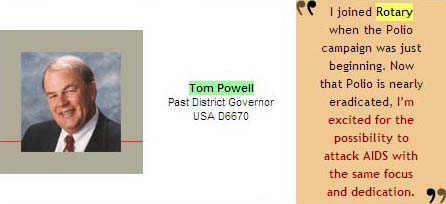
4. Thomas Powell & the Rotary connection
From page 2 of Dr.
Wulsin's "malariotherapy report:
My approach to
resolving the issues was approved by my two
supervisors Dr. Henry J. Heimlich and Mr. Thomas
Powell.
Why was Rotary International
executive Thomas
Powell of Mason, OH - who was
simultanously a board member of both Rotary
International's
Africa AIDS Project and the
Heimlich Institute - supervising Dr. Wulsin's
Africa "malariotherapy" report? It's also probable
he knows the identity of the
American sponsor of the experiments,
information which Dr. Wulsin and my father
have refused to disclose.
Other Rotarians - and
University of Cincinnati medical school faculty -
are also involved in the Heimlich experiments. Contact
Peter for more information.
Back
to Table of Contents

Michele Ashby,
president of MINE LLC,
Denver (right), photo: Denver
Post 5/27/11
5. A cheap AIDS cure would be worth its weight in
gold - the Michele Ashby connection
From a November 5, 2008 press release, Michele
Ashby
Joins
Lake
Victoria
Mining
Company's Board:
Lake Victoria
Mining Company (OTCBB:LVCA) is pleased to
announce that Michele Ashby is joining the
Company's Board of Directors. Ms. Ashby is the
founder, owner and Chief Executive Officer of
MINE, LLC, a Colorado company organized to
promote selected natural resource companies to
the investment community through private
conferences. She has occupied that position
since July 2005. In 1988 she founded the Denver
Gold Group Inc., and until 2005, she was the
Chief Executive Officer of that organization,
which is dedicated and operated as a trade
association for the mining industry...Lake
Victoria Mining Company, Inc. is working to
create another gold mine in the world famous
Lake Victoria Greenstone Belt, Tanzania, East
Africa. Tanzania produced 1.75 million troy
ounces of gold during 2007 and is the 3rd
largest gold producer in Africa....
UPDATE:
On July 27, 2009, the company received a
written letter of resignation from Michele Ashby,
resigning from the Board of Directors, effective
July 23, 2009. Her resignation was not as a result
of any disagreement with the Company. (US
Securities & Exchange Commission)
Ashby is also tied to the
illicit "malariotherapy" experiments conducted on
AIDS patients in Ethiopia and Gambia by the Heimlich
Institute.
As everyone knows, the
continent of Africa has been devastated by the AIDS
pandemic. This includes the workforce of the African
mining industry. For example, about
1/3
of
South
African
mine
workers suffer from HIV/AIDS. Therefore
the promise of an inexpensive, drug-free cure for
the disease would certainly appear seductive to
mining companies.
That's exactly what the
Heimlich Institute has been selling. From
Nashville's CityPaper, October
21, 2004:
New
forms of low-cost cures will be discussed at
this year's PanAfrica Conference 2002, which is
scheduled from Oct. 31-Nov. 2 at the Millennium
Maxwell House Hotel off MetroCenter Boulevard.
One of the keynote speakers is Dr. Henry
Heimlich, inventor of the Heimlich maneuver, who
will talk about the progress of Malariotherapy,
which, if successful, would offer a cheap
treatment for people infected with the AIDS
virus. The therapy involves infecting patients
with an easily curable string of malaria
parasites, which prime patients' immune system
into battling other infections. Ater three weeks
the patient will be treated with an inexpensive
cure for the malaria parasite, and his immune
system will continue to battle HIV, according to
Heimlich.
From Caring World,
Heimlich Institute newsletter, Spring
1999:
In
May, Koos Oosthuizen, M.D., primary and
occupational health advisor to Randfontein
Estates Gold Mine, wrote to the (Heimlich)
Institute to suggest clinical trials in
Johannesburg, South Africa. Dr. Oosthuizen
estimates more than 35 percent of the mine’s
workers are HIV-positive. With the participation
of Dr. Oosthuizen and N.F. Alberts, M.D., these
trials could involve as many as 300 HIV/AIDS
patients.
From Immunotherapy
and Beyond, the "malariotherapy"
marketing prospectus Dr. Victoria Wulsin wrote for
the Heimlich Institute (p.16):
From Thomas Francis's
November 2005 Radar Magazine
article:
In
particular Heimlich targeted South African gold
mines, which employ a large population of poor,
AIDS-ravaged miners who live in prison camp-like
conditions. Wulsin told me that over the last
several years Heimlich has sought to convince
South African gold mining companies of the
merits of malariotherapy, in the hope that they
would allow him to conduct clinical trials on
the miners, many of whom are HIV-positive.
Wulsin was to have a role in this effort. She
says that in 2002 the gold mines sent doctors to
visit Heimlich in Cincinnati to discuss the
prospects for a study, but the talks eventually
broke down over disagreements over who would pay
for what. According to Wulsin, Michele Ashby - then
the chief executive of Denver Gold Group, an
international consortium of gold mines - was
acting as a broker between Heimlich and the
mines. Wulsin's report notes that Heimlich spoke
at the Mining Investment Forum in 2002, in
Denver, where Ashby introduced him to "12 CEOs
who operate in South Africa and other
locations." When I called to ask Ashby about her
role in malariotherapy, she hung up on me.
Robert Anglen of the Cincinnati Enquirer
told me Ashby was similarly reluctant to discuss the
subject with him. According to Anglen, he called her
while reporting a story about the Heimlich
"malariotherapy" experiments in Africa as a
follow-up to Anglen's February 2003 Sunday front
page expose of the Heimlich-UCLA
China "malariotherapy" story. He told me that
Ashby was hostile and refused to talk. Next the Enquirer
received a threat letter from her attorney. The
Enquirer never reported the story.
Ashby and my father remain close. My
father - who does not hold a medical license and who
was fired from his last hospital job in 1976 - was a
panelist on a medical forum hosted by Ashby in July
2008 for Dani's Foundation, a high-profile
Denver-based cancer cure nonprofit she founded:
Dani’s Foundation, a national
not-for-profit organization based in Denver,
hosted an inaugural Ewing’s Sarcoma Medical
Advisory Forum July 18 - 20 in Denver. A panel of
nationally recognized medical and professional
strategists gathered together with the goal of
assisting the Foundation...Michele Ashby, Founder
and President of Dani’s Foundation, was
instrumental in organizing the inaugural
meeting...Other professionals who joined Ashby and
the Dani’s Foundation Board of Directors included
Dr. Henry Heimlich, The Heimlich Institute,
Cincinnati, OH; Dr. Jeffrey Toretsky, Lombardi
Comprehensive Cancer Center, Georgetown, MD; Dr.
Lorrie Odom, Rocky Mountain Pediatric Hematology
Oncology, Denver, CO; Dr. Larry Wiese,
Therapheresis, Inc., San Diego, CA: Misty Rowe,
PhD, Golden, CO; Dr. Kenna Ducey-Clark, DC,
Denver, CO; and Mr. Jason Greer, 17 year Ewing’s
survivor, Missoula, MT.

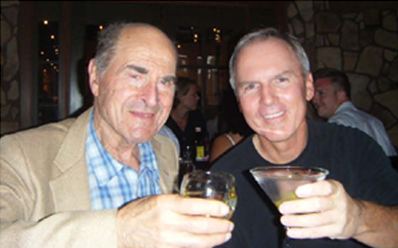
Jeffrey
Toretsky MD, Lombardi
Cancer Center, Georgetown University
Larry
Wiese,
Therapheresis,
Inc., San Diego, CA
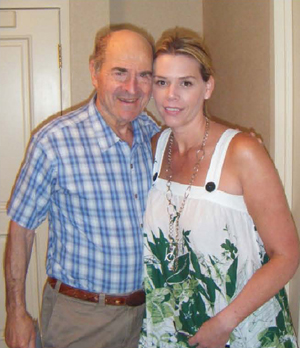
Kenna
Ducey-Clark, DC, Falling
Leaves Health, Denver, CO
Ashby's charity regularly gets hyped in
the Denver Post's society pages, such as this March
20, 2009 column:
Last summer, when
executive director Martha Simmons and founder
Michele Ashby started laying the foundation for
My Big Greek Roast, they could not have imagined
just how big this benefit for Dani's Foundation
would turn out to be. It started out as - and
ultimately did become - "a night of love and
laughter" in honor of Denver Broncos trainer
Steve Antonopulos. But for a while there, it was
another chapter in the developing story
surrounding quarterback Jay Cutler's future with
the team. An estimated 100 members of the
international media swooped down on Invesco
Field last Saturday night, hoping to grab a
photo or a quote from Cutler as he arrived for
the dinner and auction chaired by former Bronco
Jim Jensen. Cutler didn't show, but owner Pat
Bowlen did....The big plus: "The foundation's
name gained worldwide exposure," Simmons
said...With 300 guests and profits just shy of
$50,000, the event was the largest in Dani's
Foundation history...Other guests were Anschutz
Foundation director Jeff Pryor and his wife,
Maureen; Janie and Buck Hutchison; Sue
Christiansen; state Sen. Nancy Spence and her
husband, Dr. Pete Spence; Barrel Man" Tim
McKernan with his wife, Becky.
To date only Radar Magazine has reported
Michele Ashby's association with the Heimlich
Institute's illicit, abusive, and possibly illegal
AIDS experiments, experiments which, according
to my father, are ongoing. Given her
experience and connections, did she have anything to
do with the alleged $9 million funding of the
experiments by African gold mining companies
(discussed in the next section)?
Of these prearranged private meetings,
Michele Ashby, founder and CEO of MINE LLC says,
"MINE LLC has more than 20 years of success in
bringing together company executives with major
investors and analysts...Over these
two decades, I have evolved into a sort of
matchmaker. (source)
Back
to Table of Contents
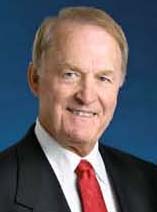
E.
Anthony Woods
6. Where's the $9 Mil? Ask Phil
My father,
because he's a pioneer, has always been
criticized, attacked by the medical
establishment whenever he's come out with one
of his major discoveries - Phil Heimlich, ABC
20/20, June 8, 2007
In 2003, a Cincinnati Enquirer reporter
shared information and documents about a consortium
of African gold mining companies that allegedly
donated $9 million to the Heimlich Institute to fund
the Africa experiments. The money appears to be in
an offshore trust. In addition to the
previously-mentioned individuals, who else should be
able to provide more details?
Presumably, my brother and
the other HI board members have access to the
financial and medical records of the Africa (and
China) experiments. Click
here for the 1995-2006 HI IRS 990 tax returns. (It's a big
file, so easiest to save it to hard drive, rather
than viewing via your browser.) The most recent 990
lists the following corporate members:
Henry Heimlich MD,
Trustee
Philip
M. Heimlich, Vice-President
Barbara Lohr, Secretary (Deaconess's Director of
Corporate Marketing)
E.
Anthony Woods, Chairman (Chairman of
Deaconess Associations)
Jane Mary Tenhover, Trustee (Executive Director
of the Deaconess Health Associations Fund)
If the Heimlich Institute is indeed
sitting on millions in undeclared funds, that may
explain my brother's conduct towards me. Since I
began speaking out under my own name about my
father's medical frauds in a Cleveland Scene
cover story (Heimlich's
Maneuver, August 11, 2004), my brother, my
father, a press agent, and couple of other creeps
engaged in a coordinated smear campaign, telling
reporters and others that I "have a history of
mental problems" and making other false and
defamatory statements.
As reported in Cincinnati
CityBeat, I eventually had to hire attorney Louis
Sirkin, a well-known First Amendment defender,
who went after Phil for defamation and got a
settlement offer. Mr. Sirkin also sent cease
and desist letters to my father and others.
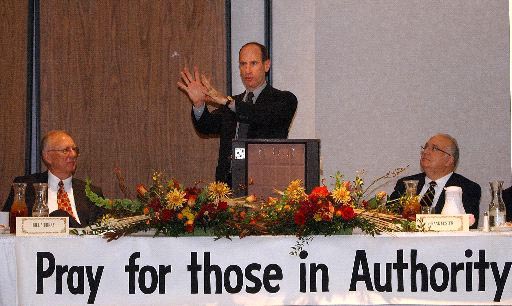
Phil
Heimlich at a Topeka, Kansas "Prayer
Breakfast," describing how he had a religious
epiphany "in 1981 at a Bob's Big Boy
restaurant, where he accepted Christ as his
savior" - (Topeka
Capital-Journal, 11/15/03)
Incidentally, Phil's a leader in the International
Association of Character Cities, a front group
for evangelist Bill Gothard. Here's
a video segment of a speech which Phil
presented at that organization's 2005 national
conference, entitled Truthfulness in Politics.
Speaking of truth, after being swept out
of political office in 2006, this
April 28, 2008 press release announced he was
now a Christian talk show host with a syndicated
radio program, "Hard Truths with Phil Heimlich,"
distributed by Salem
Radio Network.
Since then, Phil's
show has been axed, but perhaps his commitment
to "hard truths" extends to his 20-year tenure as #2
man at the Heimlich Institute and will motivate him
to produce the financial and medical records,
including details about the Heimlich Institute's
experiments on African prostitutes.
Click logo to visit www.heimlichhardtruths.com
Back
to Table of Contents
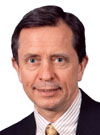
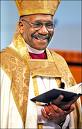
Dehner
Thompson